
The Characters · Joseph Kabongo
The man the city wants to forget.
Before the body in the snow, before the questions, there was Joseph - a reader, a son, a stranger in a city that never asked his name. This is the part of the story the trial won’t tell you.
The accused
Joseph Kabongo, a man written out of his own story
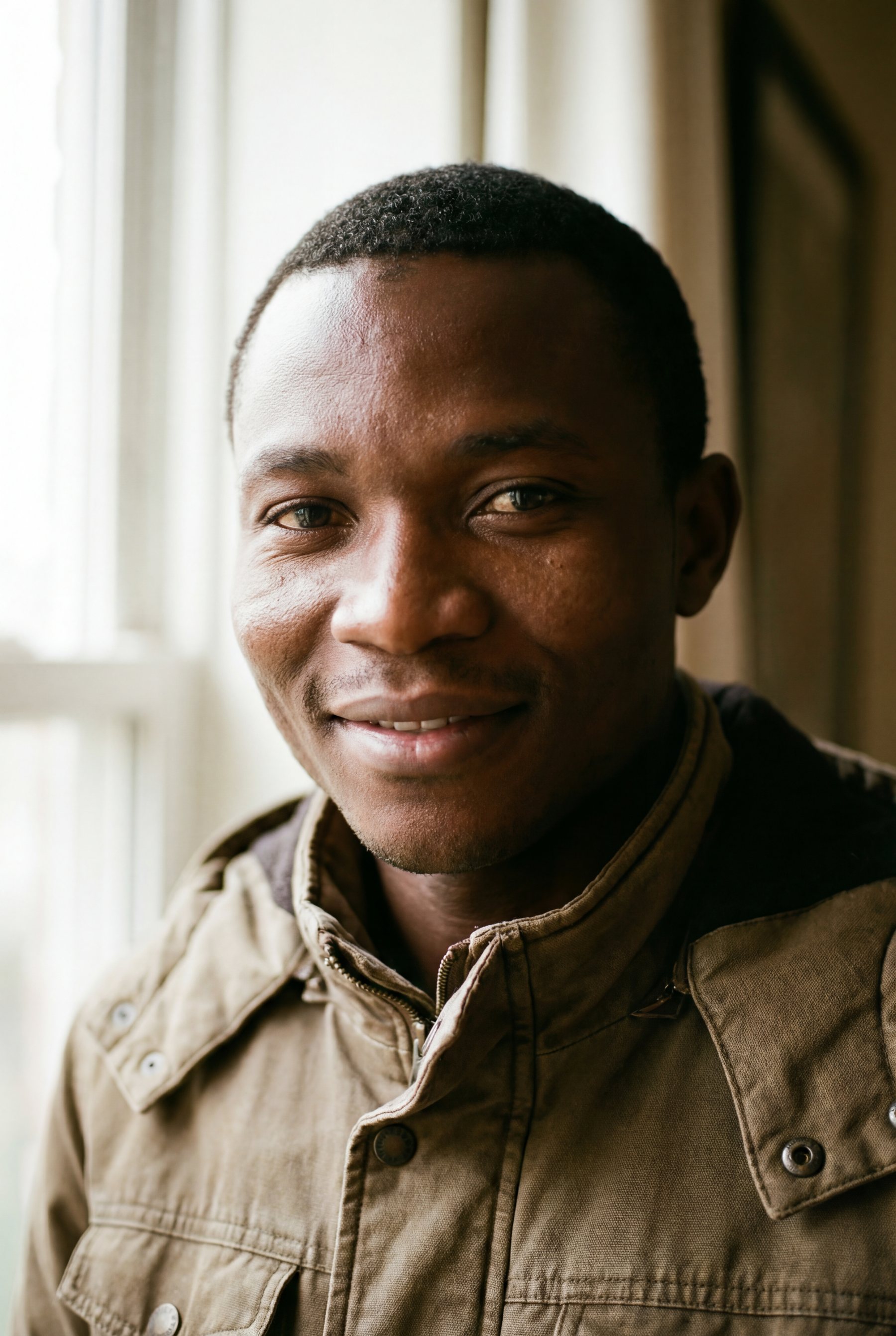
By the time the city learns his name, it has already decided what he is. But Joseph is 26, born in Kinshasa, and the distance he crossed - the Sahara, a Libyan prison, a boat in the dark - is nothing compared to the distance left between who he was and who Montreal will let him be.
He arrives with a degree no office here will recognise and a past in his pocket he cannot risk explaining. He is not a suspect. He is a person the system keeps failing to see. The difference is the whole film.
Ten things about Joseph you won’t hear in court
The charges are one paragraph. The man is a thousand. Ten small rituals that make him real - and the things he will never say out loud.
-
01
How he starts the day
He wakes before the tents stir, lies still, and listens to the camp breathe. Then, in his head, he recites the first stanza of Césaire’s Notebook - not from faith, but to prove to himself he is still the same person who left home.
-
02
The one luxury he allows
Strong black tea, two sugars, the bag left until the liquid is almost too dark. His mother brought it to him before school in Kinshasa. In the camp he makes it in a tin cup, and the sweetness is the only thing he lets himself want.
-
03
The meal he won’t cook
Moambé - chicken in palm oil with okra, his mother’s recipe, all afternoon long. He has never tried to make it himself. He’s afraid it won’t taste the same, and that would mean the home he remembers isn’t coming back.
-
04
What he reads when no one’s watching
Anything the camp library throws at him - mysteries, romance, old science magazines. His secret love is geography: he’s memorised the map of Canada, every river he’ll likely never see, the slow curve of the St. Lawrence.
-
05
The power he wishes for
To be invisible. Not a hero’s power - just to walk a Montreal street without being looked at, sized up, asked for papers. To simply exist, without having to explain himself to anyone.
-
06
What he does at 3 a.m.
He writes to his father. Forty-three letters now, folded under the sleeping bag. He will never send them. He will never stop. It is the only conversation he still lets himself finish.
-
07
What he carries
A smooth stone from the beach in Italy, where the boat finally touched land. He can’t say why he kept it. Maybe because it’s proof - small, cold, real - that he made it across.
-
08
The habit he can’t shake
He counts the exits. Every room, every bus, every tent - he finds the way out before he sits. People read it as nerves. He is nervous. Just not for the reasons they think.
-
09
The sound that brings him home
Rain on a tin roof. In Kinshasa it meant the lights would go and the family would gather by candlelight. Here it means a quiet night in the camp, no sirens, no one calling his name.
-
10
The name he’d give a cat
Mboka - Lingala for “village,” for “home.” He’d name a cat that, because cats go where they please and still come back. The one kind of leaving he trusts.
He isn’t guilty of what they think. He’s guilty of having a past no one in this city can translate.
THE CROSSING · character note
Souvenirs
Three photographs from his past that he keeps preciously. Pieces of the life he left - a reader, a storm, a quiet hour with his notes. The film remembers what the file forgets.
-
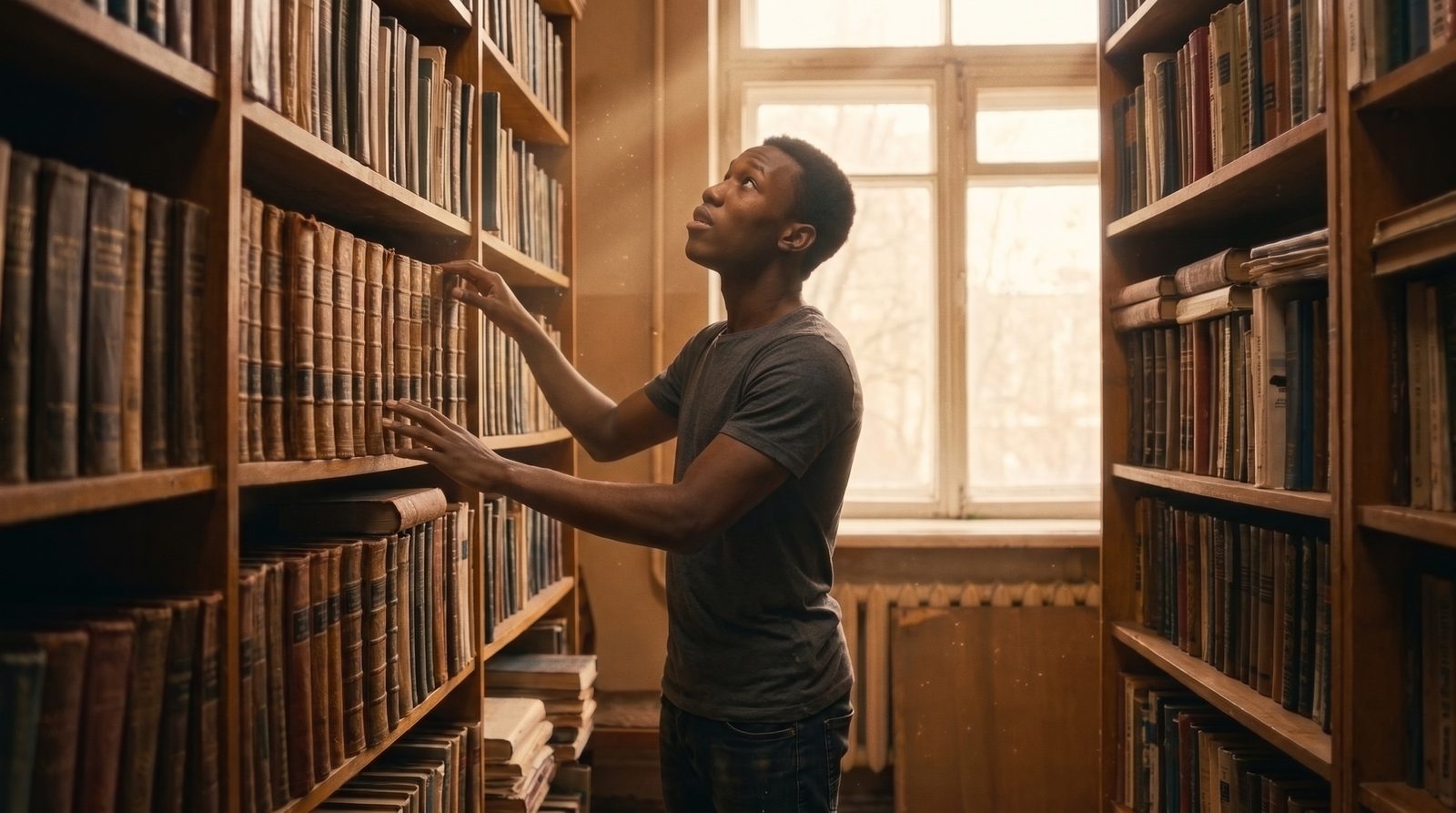
A reader in a library. -
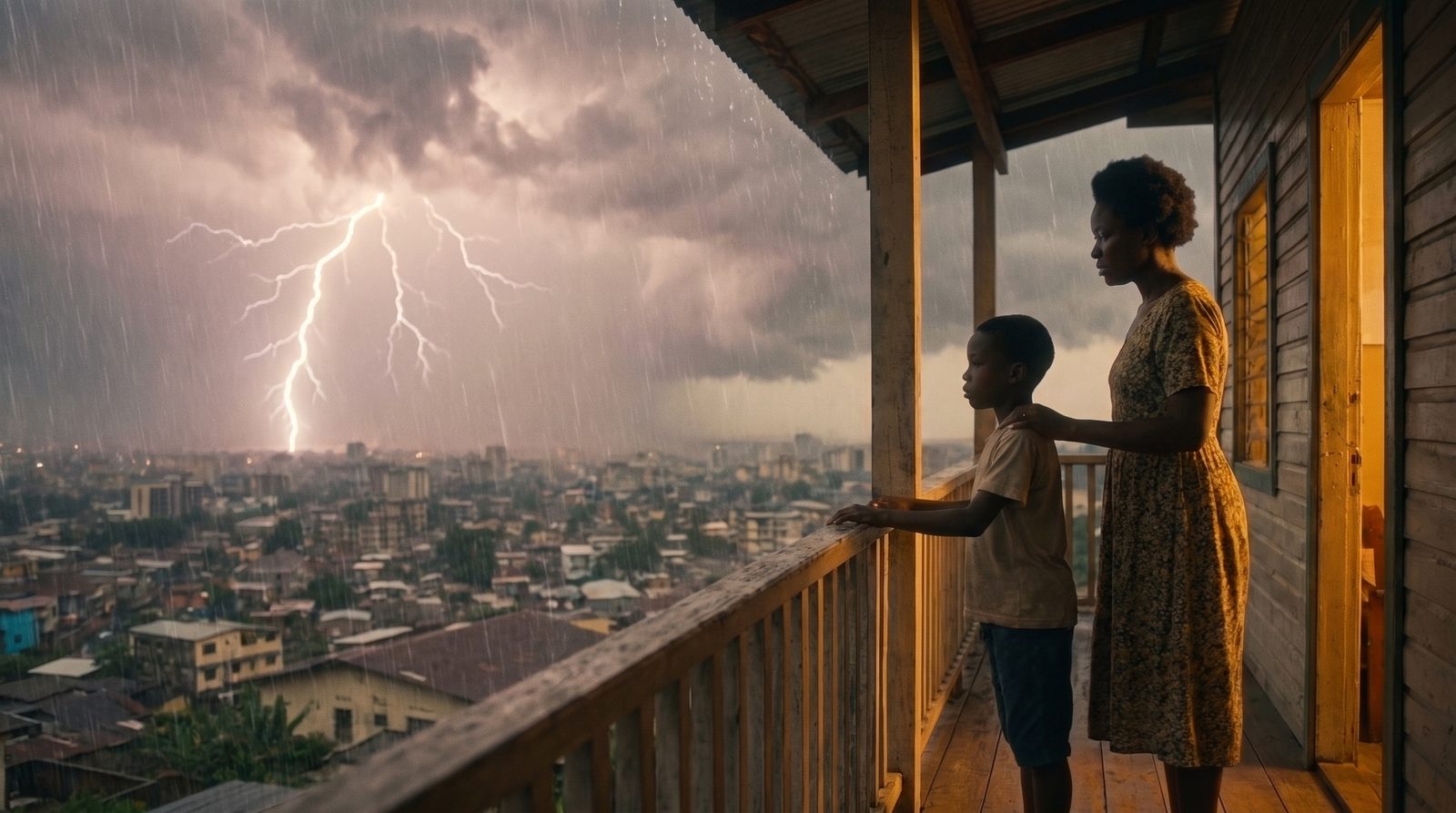
Waiting out the storm. -
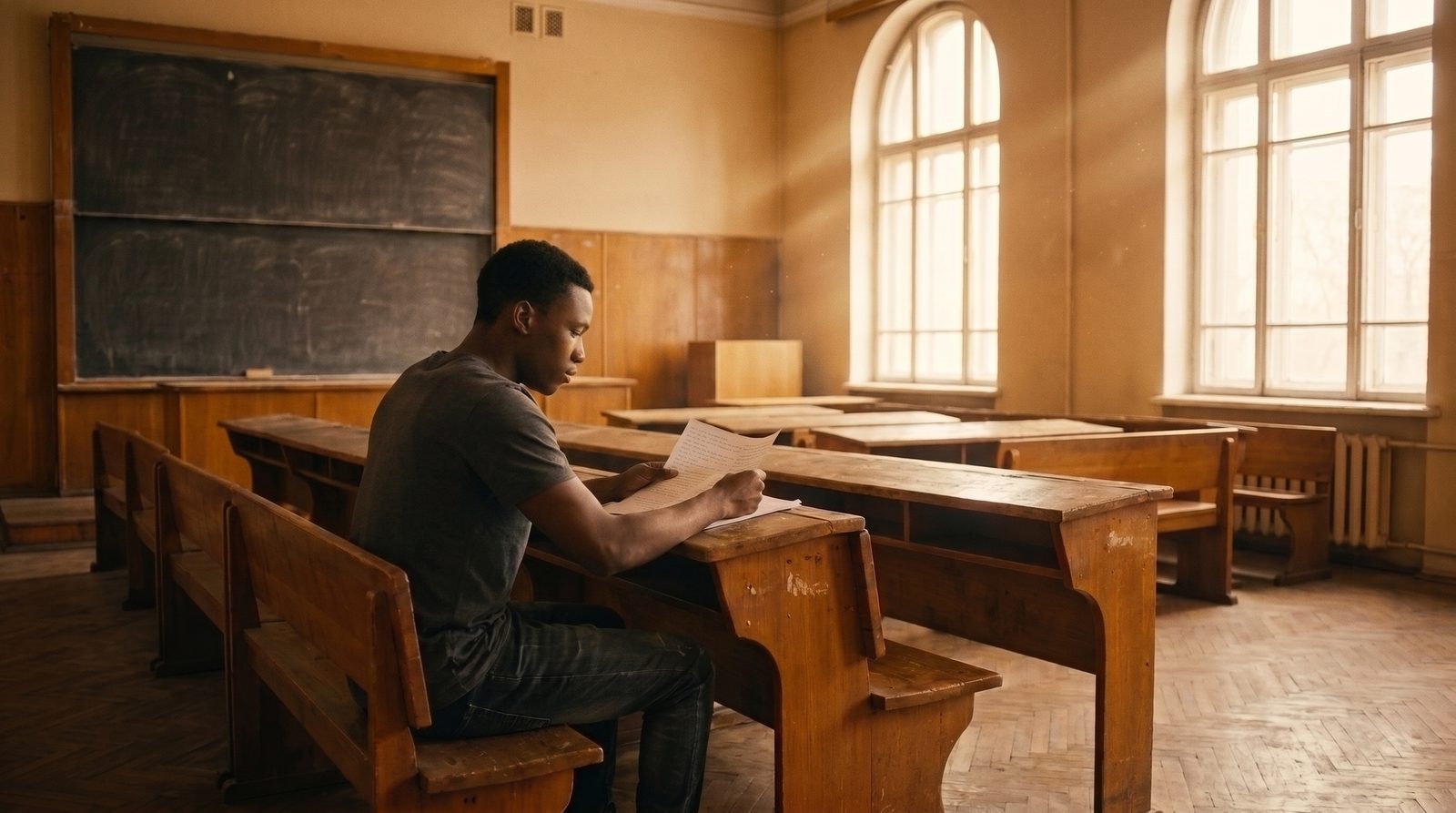
A student, alone with his notes.
Voices from the cold
The sonic portrait of every soul in the story. Joseph’s silence has a score.